
It has been a busy few months of new deposits here at Bristol Archives. As a local authority archive service, we collect both paper and digital records relating to all aspects of Bristol, its people, and its history. These new additions help preserve the stories, experiences, and heritage of the city for future generations while making them accessible to researchers, historians, and the wider public.
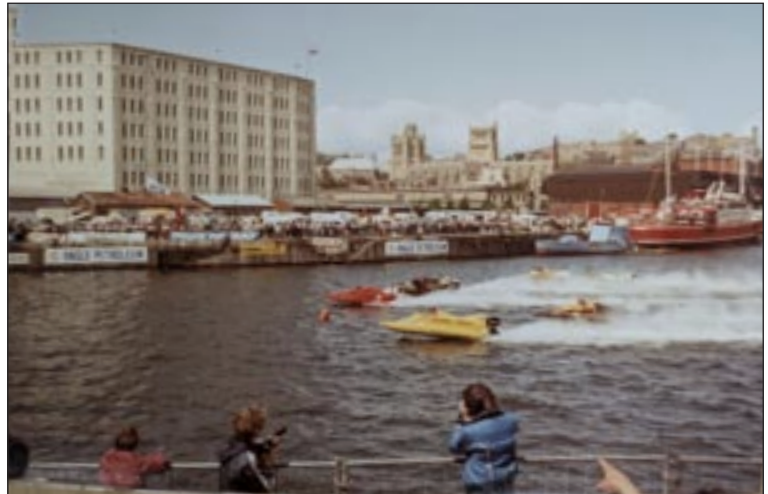
Among the recent acquisitions are photographs documenting powerboat racing in Bristol Harbour during the 1980s, offering a vivid glimpse into an exciting period of the city’s maritime life. We have also received a register of deeds maintained by a local solicitor firm, providing valuable insight into Bristol’s legal and property history over many decades.
Alongside these materials, Bristol Archives continues to receive important records from a wide range of local institutions and organisations. Recent deposits include records from Avon County Council, Bristol Grammar School, several Church of England parishes, and a number of non-conformist groups. Together, these collections contribute to a broader understanding of the social, educational, civic, and religious history of Bristol and the surrounding region.
We have also welcomed several fascinating personal and cultural collections, including a series of 19th-century letters and records from the Bristol Cine Society. Another particularly exciting addition comes from the Magic Lantern Mission, an organisation which used early cinema and projection technology to evangelise within working-class neighbourhoods across the city. These materials provide a unique perspective on Bristol’s cultural and social history, as well as the development of early visual entertainment and communication.
Bristol’s industrial heritage is also strongly represented among the 57 collections received since September. These include trade union records from the National Graphical Union at J W Arrowsmith’s, along with photographs and correspondence connected to coal mining in Bedminster and Ashton. Such collections help document the working lives, industries, and communities that shaped Bristol throughout the nineteenth and twentieth centuries.
All of these newly catalogued items will be available for anyone to request and view in our searchroom once the latest update to our online catalogue goes live, which should already have happened by the time this newsletter is published. Making these materials accessible remains a key part of our work, ensuring that the public can continue to explore and engage with Bristol’s rich and diverse history.
As an archive service, we regularly receive offers of new and unique documentary material relating to Bristol’s past. The vast majority of the records we hold are available for public consultation in our archive, supporting research, education, and community engagement. You can find out more about visiting Bristol Archives and planning your visit through the Bristol Museums website.