
In April 2025 the Working Exhibits Team became part of Conservation & Documentation and we created our newly named Collections Care Department. This marked an important step in bringing together the expertise and day-to-day care required to preserve and maintain Bristol Museums’ working heritage collections for future generations. The department now oversees the conservation, maintenance, and operational readiness of a number of significant historic exhibits and vessels.
At that point, Mayflower was out of the water for a major overhaul. What was initially expected to be routine maintenance quickly became a much larger and more complex project. The sacrificial anodes, which are designed to prevent corrosion of the hull, had failed, leaving the vessel in a far poorer condition than anticipated. As work progressed, further investigation revealed that gradual changes in the harbour’s water chemistry over time had rendered the original anode alloys ineffective.
Following detailed repair work to the hull, new anodes specifically designed to suit the harbour’s current water conditions were installed. These improvements will provide far more effective protection and help preserve the vessel for years to come. The overhaul has now reached its final stages, with only a small number of remaining tasks before Mayflower is fully prepared for the beginning of the next season.
Meanwhile, Henbury enjoyed a particularly busy and successful 2025 season. The vessel played a key role during major events including the Harbour Festival and Docks Heritage Weekend, welcoming large numbers of visitors and continuing to demonstrate Bristol’s rich industrial and maritime history in action. The success of these public events highlighted the importance of keeping historic working exhibits operational and accessible.
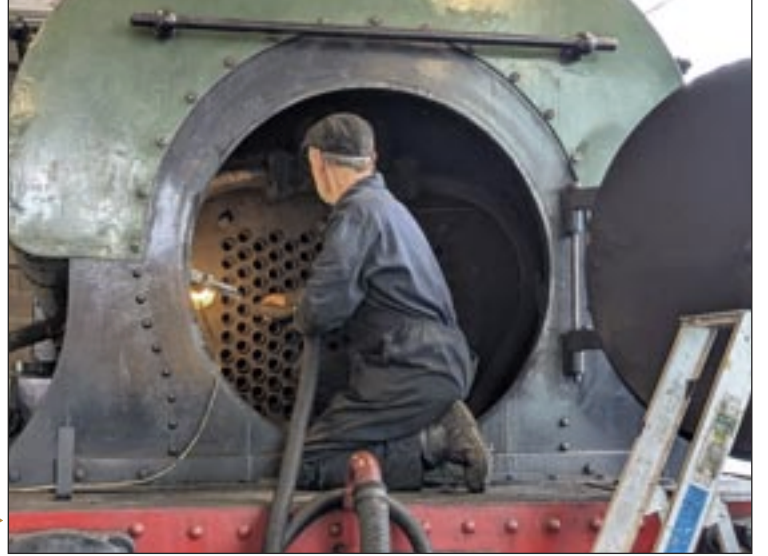
As soon as the public operating season came to an end, the focus shifted immediately to essential winter maintenance work in preparation for 2026. Each year this involves a thorough programme of servicing, including cleaning the engine, emptying the boiler, and carrying out routine inspections and maintenance to ensure reliable operation.
This season also brought additional engineering challenges linked to the type of coal being used. Since Welsh Steam Coal became unobtainable more than a decade ago, heritage steam operators across the country have faced ongoing difficulties in sourcing a suitable alternative. The coal used last year generated excessive heat, which caused the firebars forming the firebox grate to warp during operation.
To resolve the issue, the Working Exhibits team commissioned newly forged chromium–iron firebars designed to withstand far higher temperatures and provide improved durability. Encouragingly, a newly sourced low-smoke coal variant introduced later in the season has shown far better performance than previous alternatives, offering renewed optimism for the future operation and long-term sustainability of the exhibits.